
How to Make a Water Bottle: Everything You Need to Know
Table of Contents
ToggleHow to Make a Water Bottle?
Water bottles may look like simple everyday products, but making one involves several carefully controlled steps, especially in this era where safe drinking is the order of the day. From selecting the right material to shaping the bottle, adding a cap, and testing the finished product, the manufacturing process varies depending on whether the bottle is made from plastic, stainless steel, glass, or aluminum.
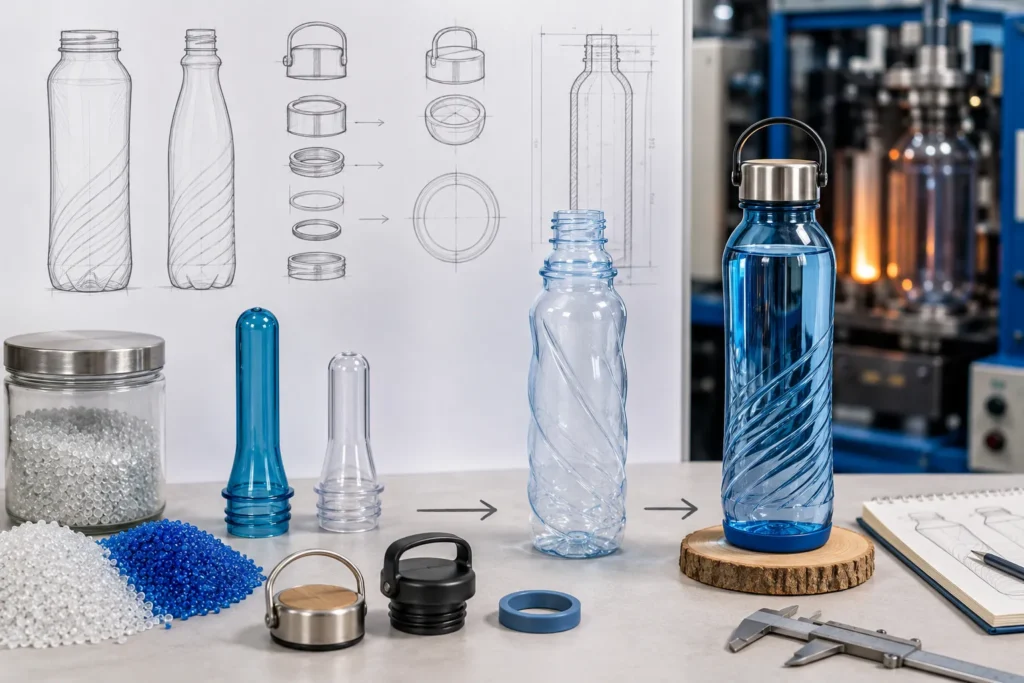
Of course, custom water bottles are made with different techniques but the most important part of it all is the standard manufacturing process and quality control procedure that ensure every water bottle you held at hand are sure to protect your water from toxic leaks from bad chemical, bacteria and other related safety issue that might arises when water bottle is being subjected to everyday uses and also during period when there is high temperature.
In this article, we’ll explain how water bottles are made step by step, the materials and machines manufacturers use, how different types of bottles are formed and finished, and how they are tested for safety and durability.
What Are Water Bottles Made Of?
Personalized water bottles can be made from several different materials, and the choice of material affects the bottle’s durability, weight, flexibility, appearance, cost, and safety. The most common materials include plastic, stainless steel, glass, and aluminum. These materials are selected based on how the bottle will be used.
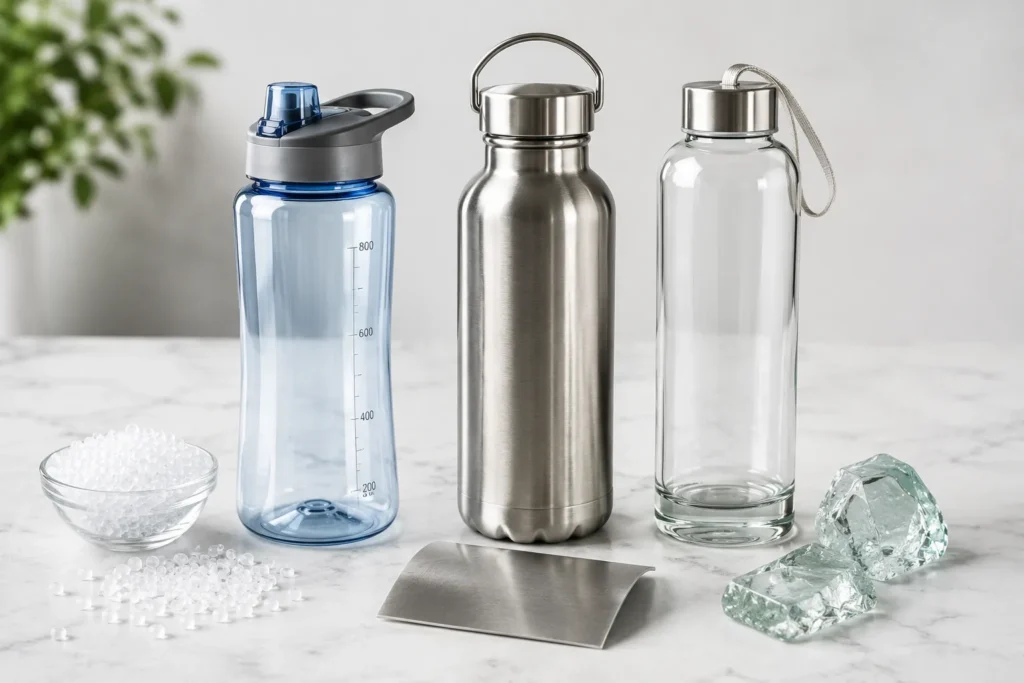
● Plastic
Plastic is one of the most widely used materials for making water bottles because it is lightweight, inexpensive, and relatively easy to shape. Different types of plastic are used depending on whether the bottle is designed for single use or repeated use.
1. PET (polyethylene terephthalate)
This is commonly used for disposable bottled-water containers. It is lightweight, transparent, and strong enough to hold water without adding much weight to the bottle.
2. HDPE (high-density polyethylene)
HDPE is another durable plastic used for some beverage containers. It is naturally opaque and resistant to impacts and many chemicals.
3. PP (polypropylene)
This material is commonly found in reusable bottles, caps, and other components. It has good heat resistance and can withstand repeated use.
Some reusable bottles are also made from specialty plastics such as Tritan, a type of copolyester designed to be durable, lightweight, and transparent. The exact plastic selected depends on the bottle’s intended use and the manufacturer’s design requirements.
● Stainless Steel
Stainless steel is one of the most popular choices for reusable water bottles because it is strong, durable, and resistant to corrosion. Unlike thin disposable plastic bottles, custom stainless-steel water bottles can withstand repeated handling and are less likely to crack or deform during normal use. They can also be manufactured with double walls and vacuum insulation, allowing them to help keep beverages cold or hot for longer periods.
● Glass
Glass is another common material for reusable water bottles. It does not typically retain flavors or odors from beverages and provides a clear view of the contents. Two common types of glass used in bottles are soda-lime glass and borosilicate glass. Borosilicate glass is known for its resistance to thermal shock, making it useful for bottles designed to handle changes in temperature. Because ordinary glass can break when dropped, manufacturers often use protective silicone sleeves or other protective coverings around glass bottles. The bottle must also be properly formed and annealed during production to reduce internal stresses that could cause it to crack.
How Are Plastic Water Bottles Made?
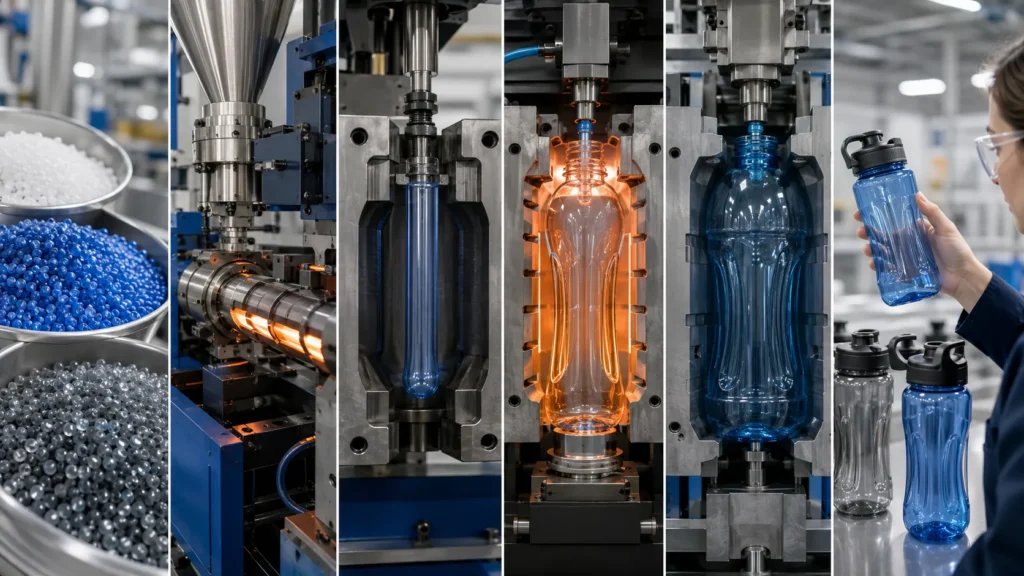
Plastic water bottles are manufactured through a series of carefully controlled processes that transform plastic resin into lightweight, durable containers that every customer cherishes and carries around. The following are the processes in making a plastic water bottle.
Step 1: Selecting the Plastic Resin
The first step is choosing the right type of plastic. For most single-use bottled water containers, manufacturers use polyethylene terephthalate (PET) because it is lightweight, transparent, strong, and suitable for food and beverage packaging. For reusable bottles, materials such as polypropylene (PP), high-density polyethylene (HDPE), or specialized plastics such as Tritan are mostly used.
Step 2: Melting the Plastic
Once the plastic resin has been prepared, it is fed into an injection molding machine. Inside the machine, heaters gradually raise the temperature until the plastic melts and becomes soft enough to be molded. The molten plastic is then pushed through the machine under controlled pressure. At this stage, the manufacturer carefully controls the temperature, pressure, and amount of material being used to ensure consistent results.
Step 3: Forming the Bottle Preform
Rather than immediately molding the plastic into its final bottle shape, they are first made into a smaller component called a preform. This stage is important because it provides the materials that will eventually be stretched to make a plastic water bottle.
Step 4: Stretch Blow Molding
At this stage, the preform is then heated again until it becomes soft and flexible. It is placed inside a bottle-shaped mold, where a combination of mechanical stretching and compressed air is used to expand the plastic. A stretching rod pulls the preform lengthwise while high-pressure air pushes it outward against the walls of the mold. The plastic takes on the exact shape of the mold, creating the final bottle.
Step 5: Cooling and Removing the Bottle
After the plastic reaches the desired shape, the bottle is cooled inside or immediately after leaving the mold. Cooling causes the plastic to harden and retain its shape.
Step 6: Quality Testing
Before plastic bottles are packaged and distributed, we always make sure to perform quality checks to ensure they meet the required specifications. Common checks we make include inspecting the bottle for cracks, deformities, uneven walls, and other visible defects. Manufacturers may also test the bottles for leakage, dimensional accuracy, strength, and closure performance.
How Are Stainless-Steel Water Bottles Made?
Custom stainless steel water bottles are another very common type of water bottle you can find around. This type of water bottle is made with the combined process of metal forming, welding, and other well-thought-out quality control processes. To make a stainless steel water bottle, you need to select a food-grade stainless steel. The most commonly used stainless steel grade is 304 stainless steel; otherwise, they contain 18% chromium and 8% nickel. This stainless steel is chosen for its resistance to corrosion and the fact that they do not absorb odors.
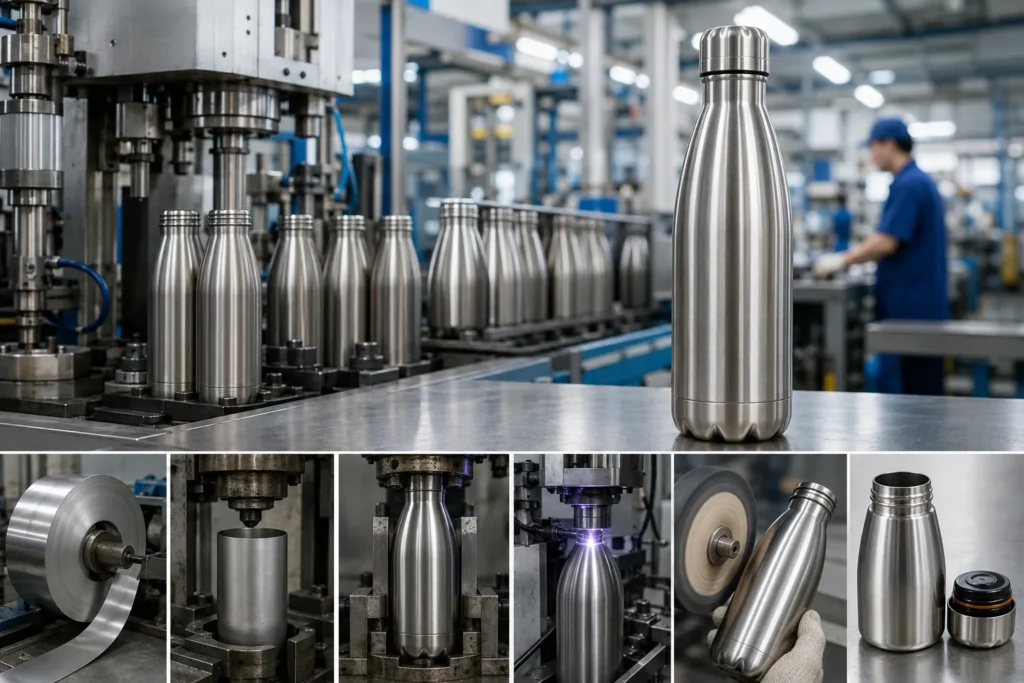
The next process is cutting. After getting the stainless steel, they are prepared and cut into the appropriate size and shape of a water bottle. The most commonly used way of doing this is by deep drawing, where stainless steel sheets are pressed into a mold. Thereafter, the molded bottles are welded and polished, while other surface finishing processes are also included for customers who request a customized stainless steel water bottle. Another most important step in this process is the necessary insulation of the water bottle for necessary heat transfer before subjecting the bottle to final testing and quality control.
How Are Glass Water Bottles Made?
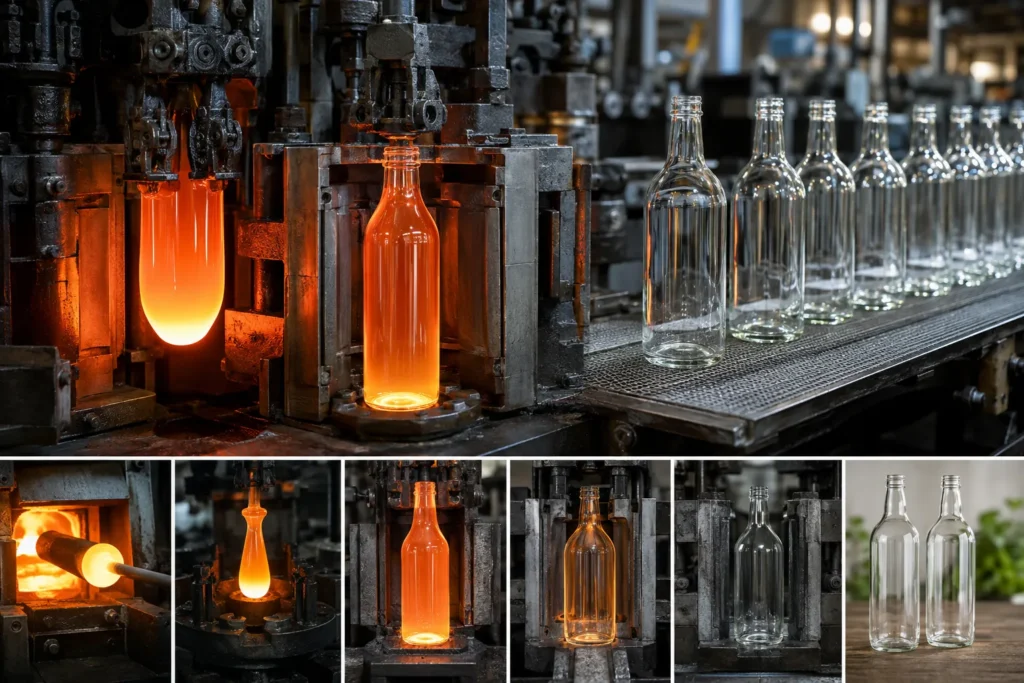
Glass water bottles are manufactured through a high-temperature process that transforms raw materials into a strong, carefully shaped bottle container. The following are the steps in making a glass water bottle.
1. Prepare the Glass Materials
The main ingredient used to make most glass is silica. This is usually obtained from sand and is mostly combined with other materials like soda ash and limestone. You can also go for Cullet. This is another option that often saves time and makes the production process faster.
2. Melting the Glass
The prepared silica or cullet are ther placed in a heated furnace at a high temperature until they melt into a thick liquid that is taken to the next stage of production.
3. Forming the Bottle
Once the glass reaches the appropriate temperature and consistency, it is divided into measured portions called gobs. Each gob contains enough molten glass to create one bottle.
The gob is placed into a mold designed according to the bottle’s required shape and dimensions. Machinery then uses pressure and mechanical forming techniques to force the molten glass against the walls of the mold.
This is the most important stage that determines the bottle’s overall shape, while the manufacturing process controls its wall thickness and dimensions.
4. Forming the Bottle Opening
At this stage, the neck and opening are formed while the glass is still hot. The dimensions have to be precise so that the finished bottle can accept its intended closure and provide a reliable seal. For reusable water bottles, the opening may also be designed to make drinking and cleaning easier.
5. Annealing the Glass
After the bottle has been formed, it cannot simply be allowed to cool rapidly. Sudden temperature changes can create internal stresses that make glass more likely to crack or break. Instead, bottles are passed through an annealing process. They are gradually cooled under controlled conditions to relieve internal stresses within the glass.
6. Packaging the Glass Bottles
Because glass is more fragile than many plastic and metal alternatives, finished bottles require protective packaging. Manufacturers may use cardboard dividers, protective sleeves, molded packaging, or other materials to prevent bottles from striking each other during transportation.
How Do Manufacturers Make Water Bottles Safe?
Practically, water bottles are designed to come in contact with drinking water. Therefore, it is important to make sure that any water bottle you purchase does not introduce harmful substances or contaminants into your water. This is obviously a common theme, especially during outdoor and sports exercises where your water bottles are mostly subjected to harsh temperatures. To make sure water bottles are safe from all these issues, manufacturers have the following processes in place.
- Select food safe material thay are suitable for contact with foods and beverages.
- Control the manufacturing processes in thr sense that production equipment like molds, forming tool amd others are always cleaned and maintained periodically.
- Prevent chemical contaminants with internal coatings.
- Subject every manufactured water bottle to chemical tests ro determined wether helical migration might occur or not.
- Test the water bottles for leaking and after that subject them to thorough cleaning and sanitation to prevent particles and other contaminants that might remain inside finished water bottles.
How Tall is a Water Bottle?
There is not really a universally accepted standardized height of a water bottle. The average height of a water bottle often depends on its capacity, shape, and most especially the design. What most manufacturers focus on is having a definite liter of water. For instance, a 500ML or 16.9 ounce wayer bottle will mostly be around 8 to 9 inches tall. While a 1 litter wayer bottle might be around 10 to 12 inches taller.
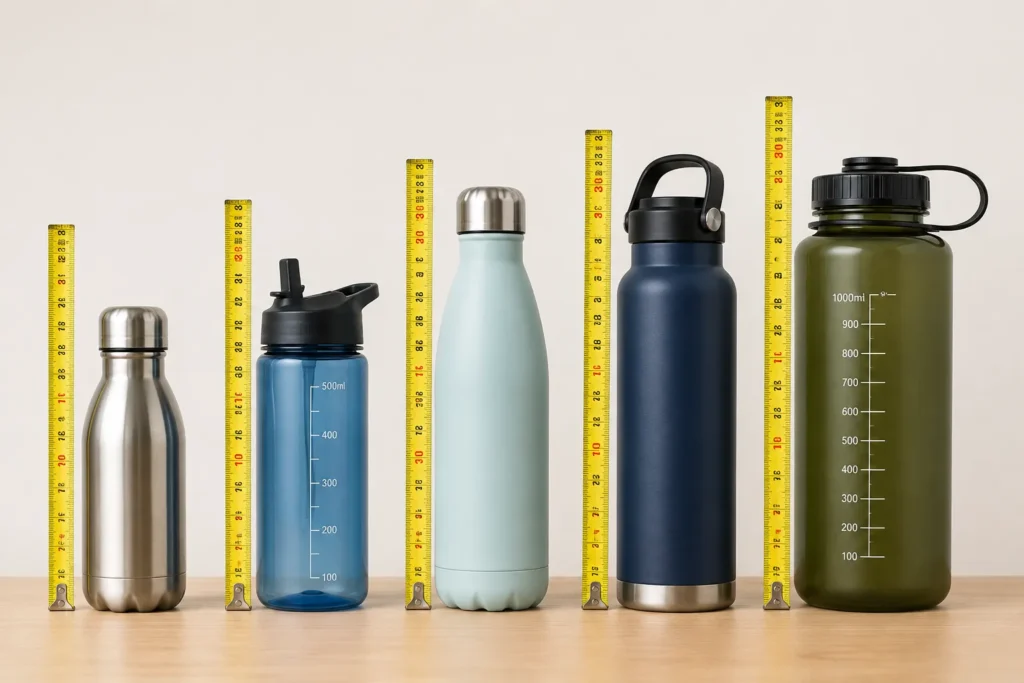
In most cases, a large reusable water bottle tends to be taller because of its extensive usage and the tendency of the owner to want to store water inside it for an extended period of time. Another factor that also determines the height of a water bottle is its shape. A narrow, cylindrical bottle may be taller, while a wider bottle can hold the same amount of water without being as tall. The cap, lid, handle, and other design features can also add to the bottle’s overall height.
How Much Does a Water Bottle Weigh?
Practically, water bottles that are filled are obviously heavier than those that are empty. Besides that, the size of a water bottle and the design are also other factors that determine the weight of a water bottle. A small plastic bottle can be very lightweight, while also the reusable glass and stainless steel are generally heavier. When a bottle is filled with water, the weight increases significantly.
Since water weighs approximately 1 kilogram per liter, a 500 ml bottle of water contains about 500 grams of water, in addition to the weight of the bottle itself. A 1-liter bottle therefore contains roughly 1 kilogram of water before the bottle’s own weight is added. For this reason, if portability is important, consider both the bottle’s capacity and its material. A lightweight plastic bottle may be easier to carry, while stainless steel or glass may offer greater durability and a more substantial design.
Can You Bring a Water Bottle on a Plane?
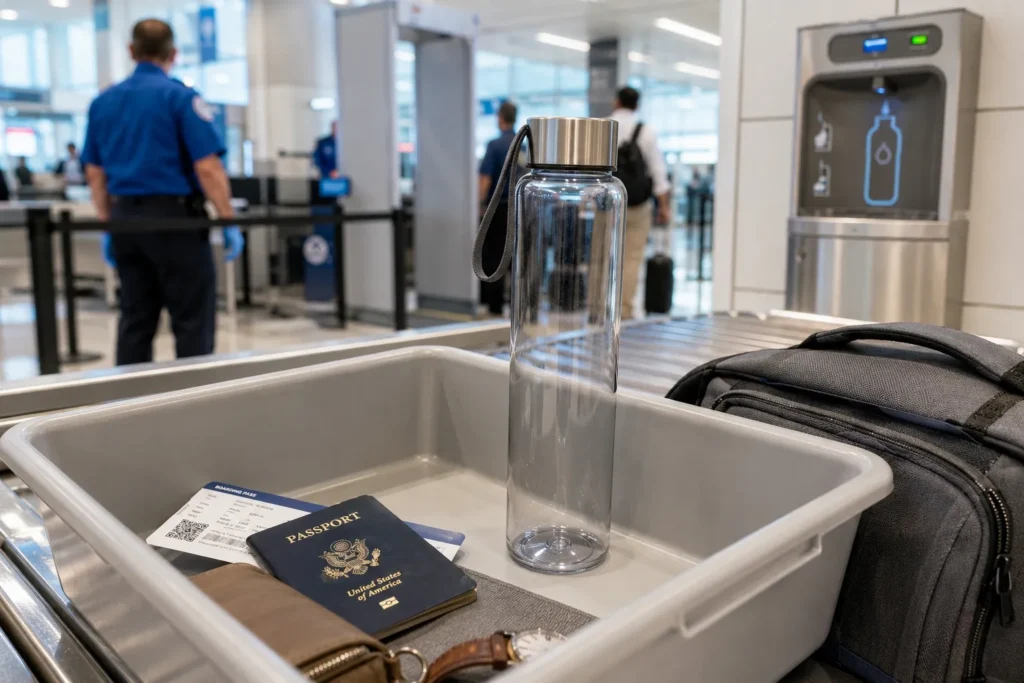
Yes, you can bring a water bottle on a plane provided that it is empty when you pass through thr airport security. This is in accordance with the TSA liquid rule that prohibits taking filled water bottled pass through the security checkpoint. What most people do after taking their water bottle through the checkpoint is to check the nearest water fountains or designated filling points where they can refill their bottle. Another way you can go about this is by making sure to freeze your water while passing through the checkpoint. Although airport security requirements for water bottles can vary, therefore tt is best if you check thr rule for carrying a water bottle on a plane in your country.
Where Can You Buy Water Bottles?
Water bottles are available from many places, including supermarkets, department stores, sporting goods shops, specialty drinkware retailers, and online stores. However, if you are looking for water bottles that can be customized with your own branding, logo, artwork, or design, buying from Fastprintstar is the best option.
With our BPA-free plastic and stainless steel options and custom water bottles with straw, we offer a wide range of materials that not only provide a safe, usable water bottle but also enhance your drinking experience. Also, our pricing is the best in the country. We offer all our customers an unbeatable price of as low as $12 per custom stainless steel water bottle. Request a quote with FastPrintStar today and create custom water bottles that make a lasting impression.
Conclusion
Making a water bottle involves much more than simply shaping a piece of plastic, metal, or glass into a container. The manufacturing process depends largely on the material used, with plastic bottles typically produced through molding, stainless-steel bottles formed and welded from metal, and glass bottles created by melting and shaping glass at high temperatures.
Regardless of the material, the basic goal is the same: create a durable, leak-resistant container that is safe for storing drinking water. Manufacturers carefully select food-safe materials, use specialized equipment to form the bottle, add caps and finishes, and perform quality and safety checks before the finished products reach consumers.