
How to Clean a Water Bottle: Step-by-Step Guide
Table of Contents
ToggleHow To Clean a Water Bottle?
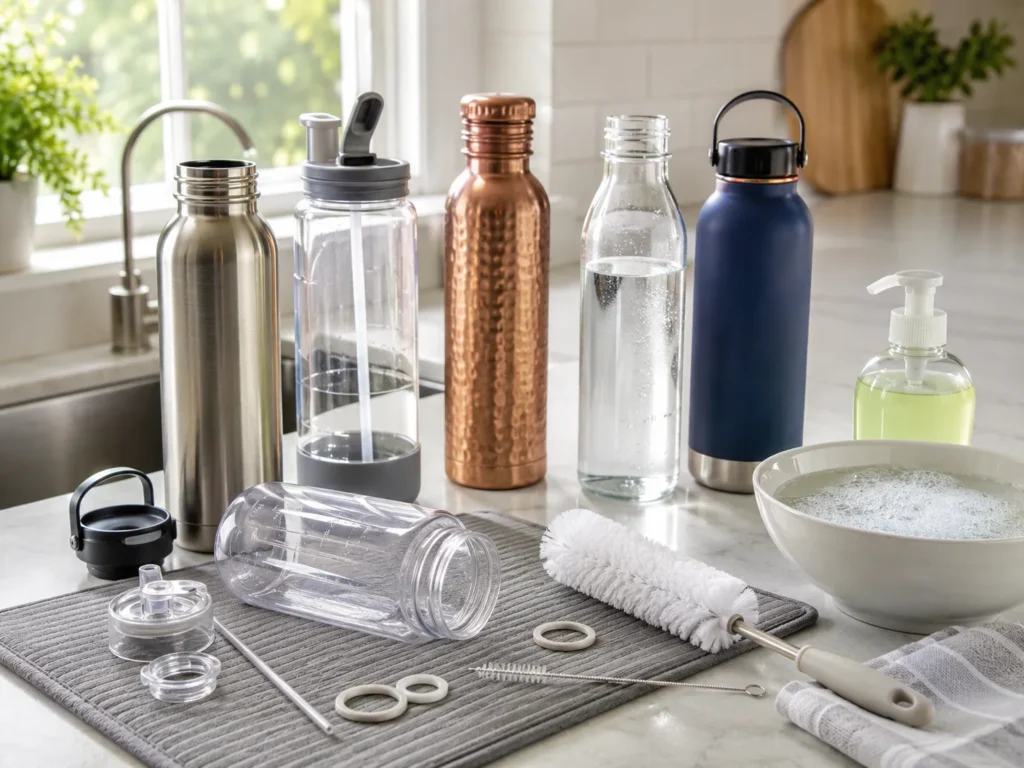
A reusable custom water bottle is one of the best inventions in the recent era that makes it convenient for everyone to go about their day-to-day activities while staying hydrated. It does not matter if you are traveling or simply running errands; a clean custom water bottle has been a known lifesaver. In the last few years, many people have been inundated by the pungent smell and clogs in their water bottles. Even at its worst, most people relate the influx of bacteria like E. coli in their water to impurities in water. As much as this might be true, the cleanliness of your water bottle is another important aspect of our daily living that we need to focus on. According to a report from Baylor College of Medicine, an uncleaned water bottle can trap germs and lead to serious health issues. These findings have more often outlined the importance of cleaning your water bottle. Not only about cleaning this time, but it is also about cleaning your water bottle right, and one of the best guides you can follow is this article.
How to Clean Stainless Steel Water Bottle?
A custom stainless steel water bottle is the most durable and eco-friendly alternative to a disposable plastic water bottle. However, with the way we lump together different varieties of drinks from tea to coffee and other beverages during our outdoor and sport games, there are so many instances where there are bacteria build up most, especially when there is moisture remaining. The following steps are the following to keep your stainless steel water bottle clean, get rid of the odors, and most importantly, keep it durable for as long as you want.
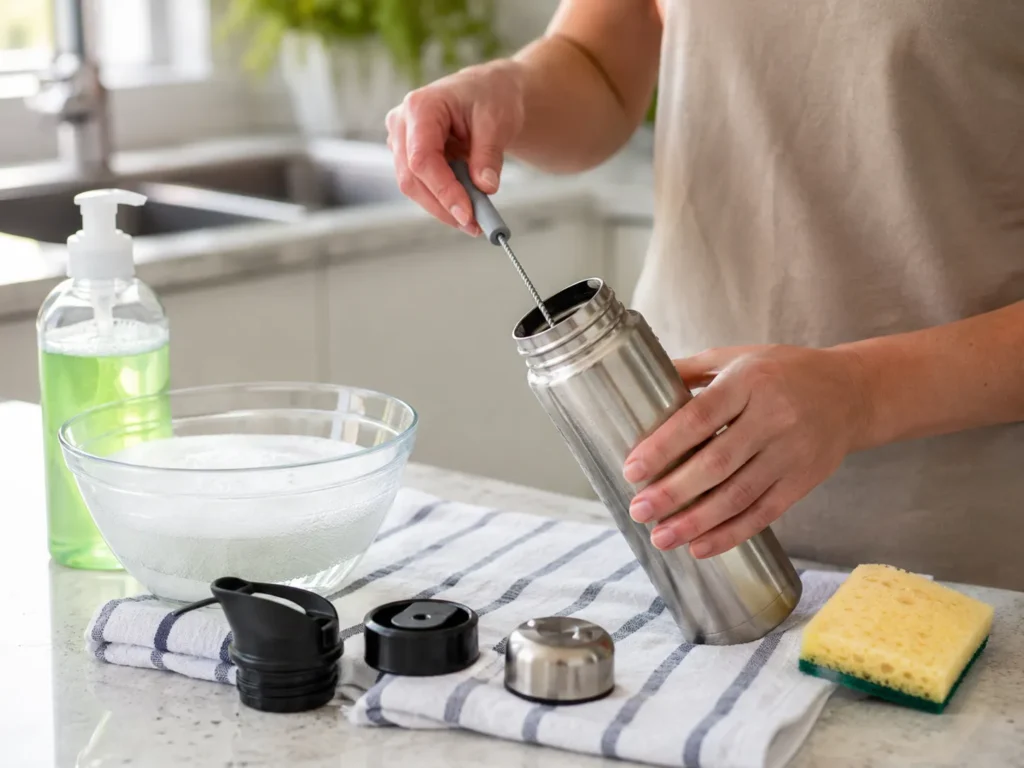
Materials You Will Need
- Warm water
- Mild dish soap
- Bottle brush
- Baking soda
- White vinegar (optional)
- Soft sponge or microfiber cloth
- Clean towel or drying rack
Step-by-Step Cleaning Process
1. Make sure you empty the Bottle
Pour out any remaining liquid and rinse the bottle with warm water to remove loose residue.
2. Start by Washing with Soap and Warm Water
Fill the bottle with warm water and add a few drops of mild dish soap. Use a bottle brush to scrub the inside thoroughly, paying special attention to the bottom and corners. Wash the outside with a soft sponge.
3. Proceed to Clean the Lid
The lid often collects bacteria because it comes into direct contact with your mouth. Remove any detachable parts, such as silicone seals or straws, and wash them separately using warm, soapy water.
4. Remove Stains and Odors
For stubborn stains or lingering odors, add two tablespoons of baking soda to the bottle. Pour in warm water and let the mixture sit for several hours or overnight. Scrub the bottle before rinsing thoroughly. Alternatively, mix equal parts white vinegar and warm water, fill the bottle halfway, and let it soak for 15–30 minutes before rinsing well.
5. Rinse Thoroughly
Rinse the bottle and all its parts with clean water until no soap, baking soda, or vinegar remains.
6. Dry Completely
Leave the bottle open and upside down on a drying rack or clean towel. Allow it to air dry completely before replacing the lid to prevent moisture buildup.
How to Clean Plastic Water Bottles?
Every time you take a sip from your custom plastic water bottle, you transfer backwash, mouth bacteria, skin oils, and food particles into the bottle. Over time, these form a slippery, microscopic layer called biofilm. If left unchecked, this slimy coating becomes a breeding ground for germs like E. coli. This is even more prevalent if you use your plastic water bottle to consume more than water, maybe coffee or tea, and the like. Because of the increasing porosity of plastic water bottles, they tend to retain bacteria and harbor musty smells.
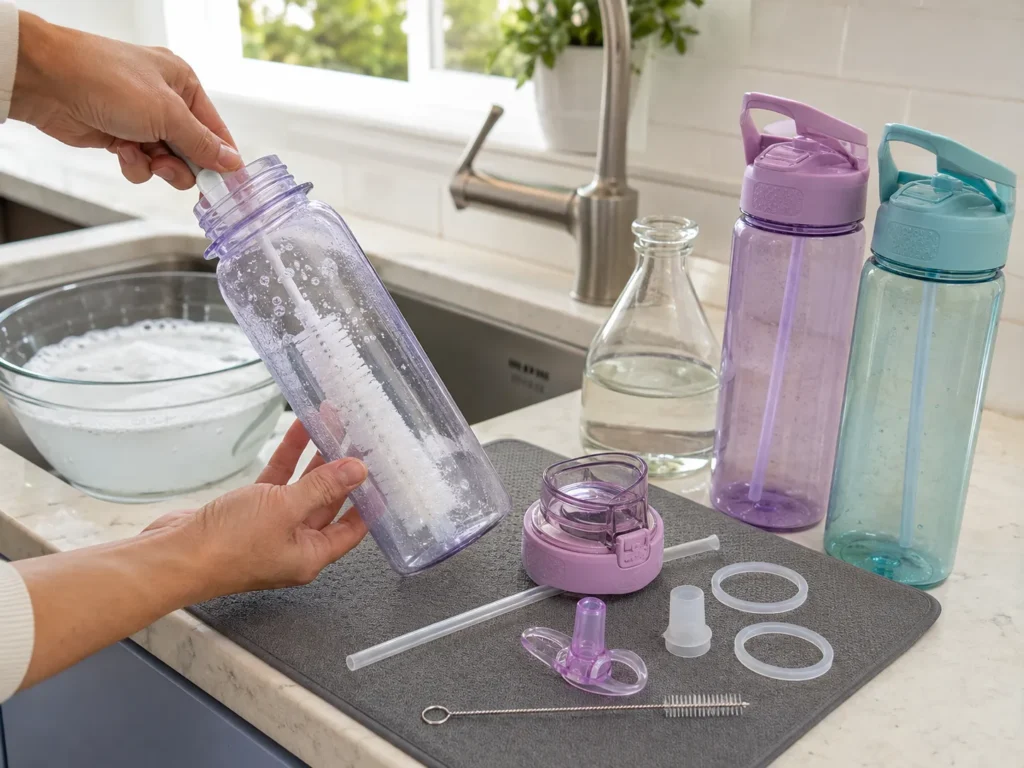
However, you can follow this process to clean your plastic water bottle successfully.
- If your have a custom water bottles with straw and other components , disassemble all parts. Take off the lid, take off the removable silicone gasket, and any straw or pop-up spout.
- Add warm water and a few drops of soap inside the interior wall. Then insert a soft nylon brush to scrub thr bottoms and interior wall.
- Get a thin straw brush to clean all the small components such as silicone rings, straws, and drinking spouts.
- Then rinse and dry.
- If your plastic water bottle has odors or sstains You can fill ⅓ of thr bottle with vinegar mixed with warm water and let it sit for 15 minutes before you pour it away.
How to Clean Copper Water Bottle?
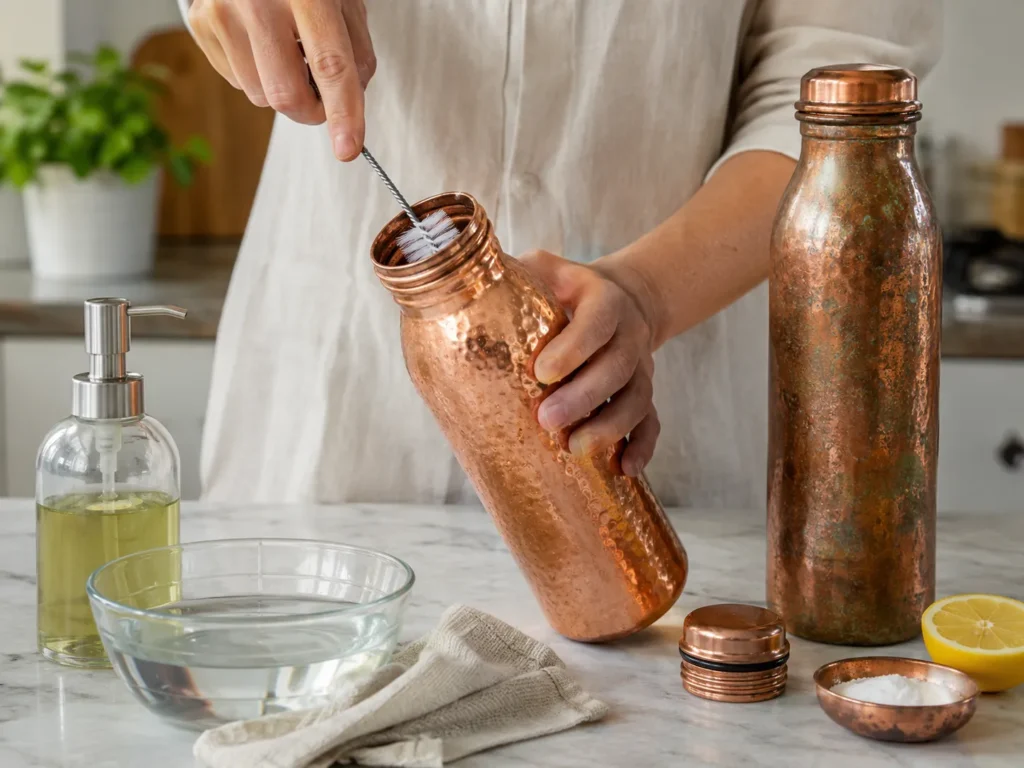
Compared to plastic and stainless steel water bottles. Copper wayer bottler requires little care and cleaning. Even as a matter of fact, consistent usage of a copper water bottle might result in the development of a darker or greenish patina due to its reaction with air and moisture. While this change is normal, removing dirt and residue buildup is also important to keep your water bottle in good condition. And one of the best ways to do that is by adding a mild dish soap and water inside the water bottle while you gently clean the inside with a soft bottle brush. In situation whwre tjere is grimy stains or tarnish, you can use a gentle copper cleaning method recommended by the manufacturer.
Why Does My Water Bottle Smell?
Over the years, the most recurring complaint that most customers have come with is concerns about their water bottle developing unpleasant smells over time. The major reason why your water bottle develops smells comes from bacteria, unhygienic usage, mold, and long-term residue trapped inside the bottle or its removable part. All these things mostly come from improper usage practises, most especially people who often close their water bottle while still wet. Consistent mistakes of this magnitude over time lead to bacteria and mildew growth, which later cause the bad smell inside your water bottle.
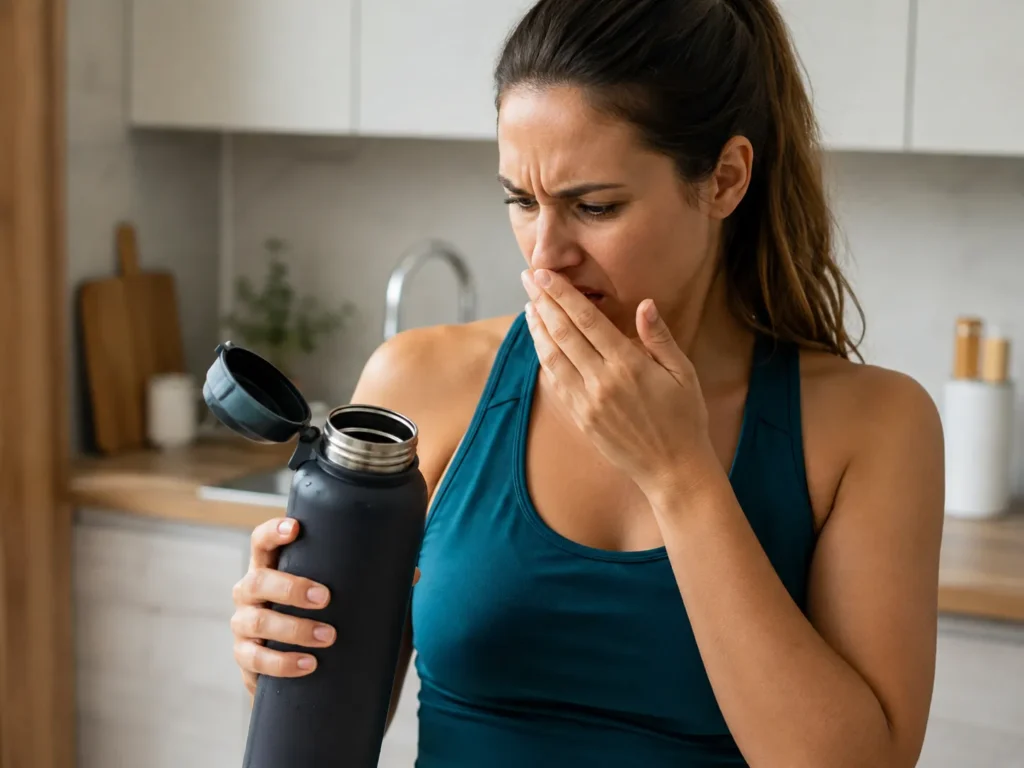
To get rid of persistent odors, soaking the bottle in a baking soda solution can help neutralize the smell. After cleaning, rinse every part thoroughly and allow the bottle to air-dry completely with the lid off. If the smell remains after thorough cleaning, check for mold, hidden residue, scratches, or damaged parts that may be difficult to clean. In some cases, replacing a damaged lid, gasket, straw, or even the entire bottle may be the best solution.
How to Clean Mold From Water Bottle?
Discovering mold in your water bottle can be one of the most horrible experiences ever. As much as this can be excruciating, that does not mean you should throw away the water bottle immediately. To clean mold from a water bottle, start by completely disassembling the bottle and removing every detachable part. Wash the bottle and its components thoroughly with warm water and dish soap, using a bottle brush for the interior and a small brush or toothbrush for narrow areas and grooves. Pay close attention to the lid and seals, as these areas can often harbor mold without being immediately visible.
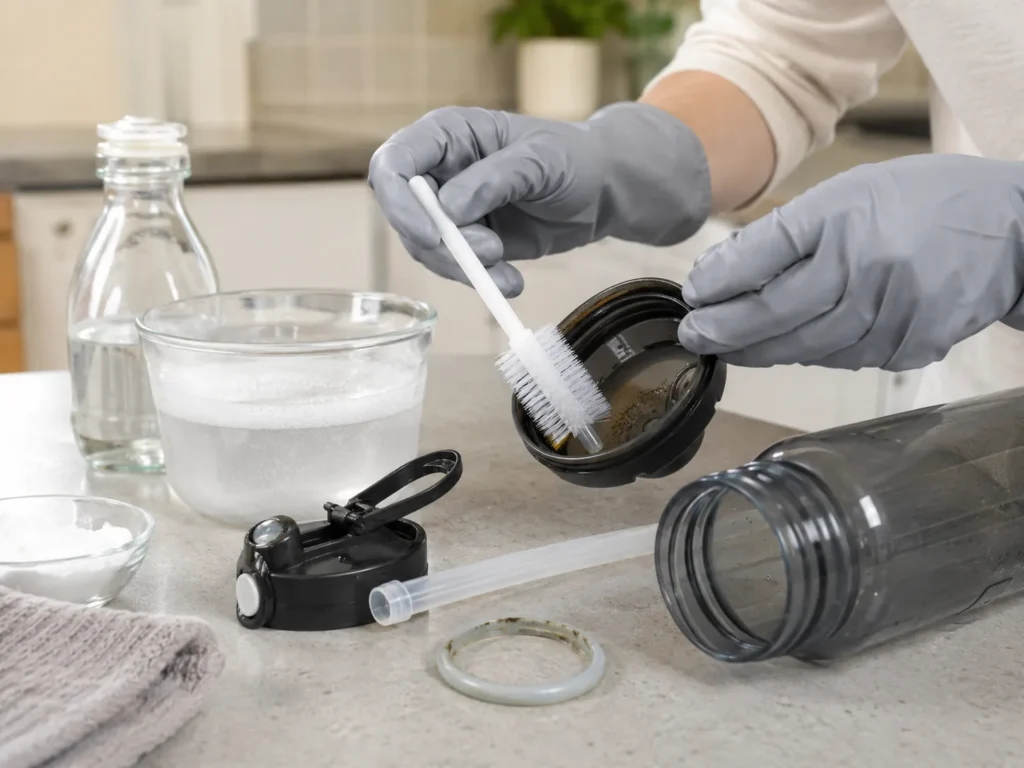
After scrubbing away the mold, rinse every part thoroughly and allow the bottle to air-dry completely before putting it back together. If mold remains after cleaning, or if it has become embedded in damaged, porous, or difficult-to-clean parts, replacing those components, or the entire bottle, may be the safest option.
How to Sanitize Water Bottles?
Although cleaning a water bottle has to be the most popular option to get them clean and remove all the visible buildup, sanitizing, on the other hand, helps to remove the invisible ones, ranging from bacteria and microorganisms that are often stuck to the surface. Before sanitizing your water bottle, wash it thoroughly to remove any dirt or residue. Disassemble the bottle and remove the lid, straw, mouthpiece, silicone gasket, and any other removable parts. These areas can trap moisture and bacteria, so they should be sanitized separately.
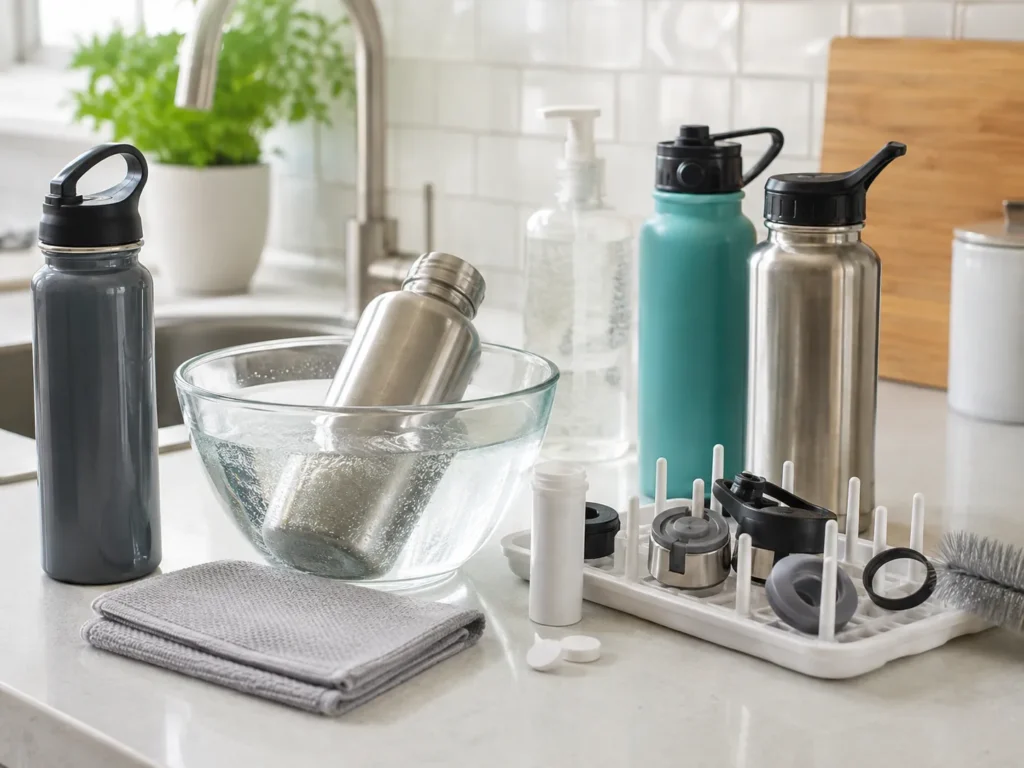
The best sanitizing method depends on the material and design of your bottle. Some bottles and components may be dishwasher-safe, while others may require a manufacturer-approved sanitizing solution or another suitable method. Always check the care instructions for your specific bottle before using heat, chemicals, or other sanitizing methods. After sanitizing, rinse the bottle and its components thoroughly if required by the cleaning product’s instructions. Then leave every part open to air-dry completely before putting the bottle back together. Storing a bottle while it is still damp can create an environment where bacteria, mold, and unpleasant odors are more likely to develop.
How Often Should You Wash Your Water Bottle?
If you use a reusable water bottle every day, you should ideally wash it at least once a day. Even when you only fill it with water, bacteria from your mouth can transfer to the bottle each time you drink from it. Moisture left inside the bottle can also create an environment where bacteria, mold, and unpleasant odors can develop.
However, the frequency of cleaning depends on how you use the bottle and what you put inside it. A bottle used only for water may require daily washing, while one used for sugary drinks, juice, coffee, smoothies, or sports drinks should be cleaned immediately after use. These beverages can leave behind residue that encourages bacterial growth and creates unpleasant smells. You should also wash the bottle more thoroughly if you notice a bad odor, visible residue, or signs of mold. Remember to clean more than just the main container. The lid, mouthpiece, straw, threads, and silicone seals can trap moisture and bacteria, so they should be removed and cleaned regularly whenever possible.
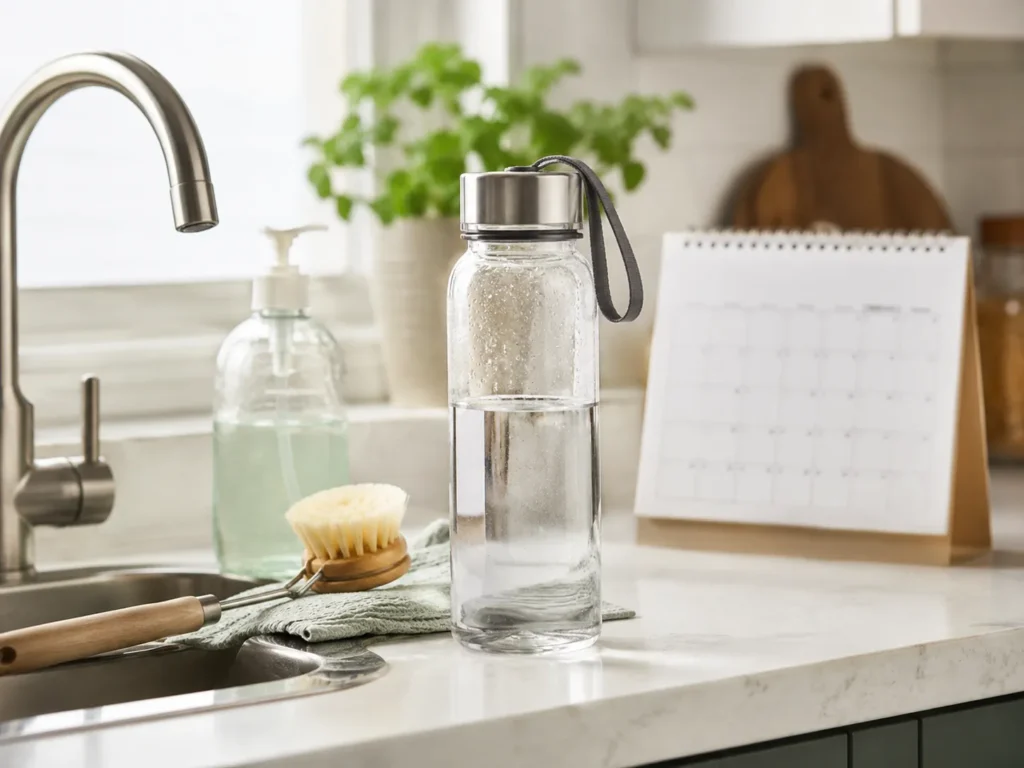
For the best results, empty your water bottle at the end of each day, wash it with warm water and dish soap, rinse it thoroughly, and allow all parts to dry completely before putting the bottle back together. Regular cleaning helps keep your water bottle fresh, hygienic, and ready for everyday use.
Maintaining a clean reusable water bottle is only one part of building healthy hydration habits. To learn more about your daily water needs, read our guide on [How Many Water Bottles Should I Drink a Day?].
Where to Buy Water Bottles?
FastPrintStar is an excellent option for anyone looking for high-quality, custom water bottles for personal use, businesses, events, schools, teams, and organizations. One of the biggest advantages of buying from FastPrintStar is our ability to combine practicality with customization. At FastPrintStar, we understand that a good water bottle should be durable, reusable, and easy to clean, while a custom design can also help promote your brand or create a memorable experience for the people who receive it.

So, instead of settling for a generic bottle, you can create a water bottle that is both useful and uniquely yours. Visit FastPrintStar to explore your options, request a quote, and order water bottles designed around your needs.
Conclusion
Keeping your water bottle clean is an important part of maintaining good hygiene and getting the most out of your reusable drinkware. Whether you use a stainless steel, plastic, or copper water bottle, regular cleaning helps prevent unpleasant odors, residue, bacteria, and mold from building up over time. The best approach is to wash your water bottle regularly, clean the lid and other removable parts thoroughly, and allow everything to dry completely before storing it. If you notice a persistent smell or visible mold, give the bottle a deeper clean and replace any parts that cannot be cleaned properly.