
How to Make an Arm Sleeve
Table of Contents
ToggleHow to Make an Arm Sleeve
Making your own arm sleeve is easier than it sounds. Whether you want a simple sun-protection sleeve for outdoor chores, sports, or custom arm sleeves, this guide covers every step, from materials to the final stitch.
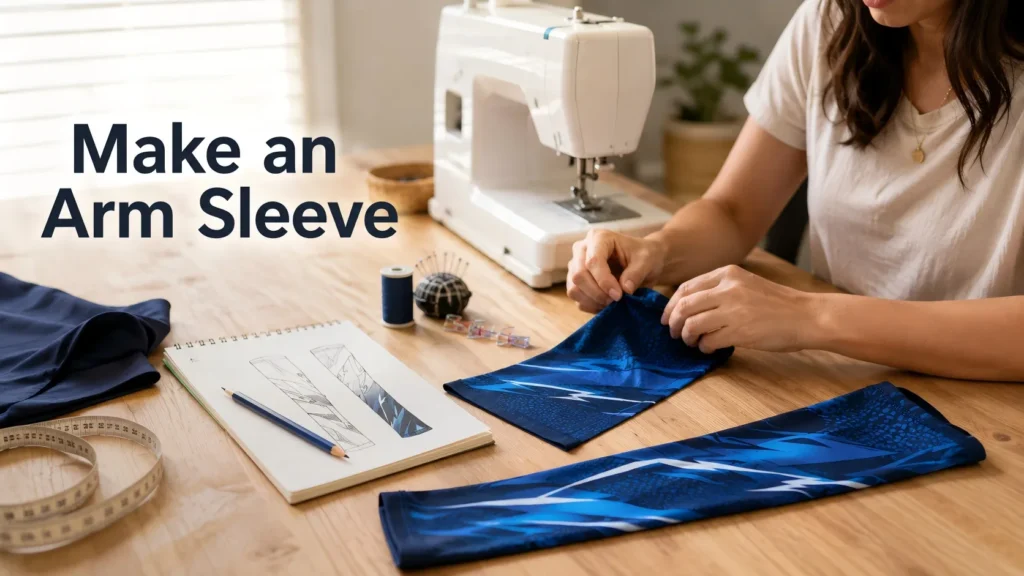
Tools and Materials You Need to Sew an Arm Sleeve
Before you start, gather your supplies. The exact materials depend on which method you choose, but most DIY arm sleeves need some or all of the following:
- Stretchy fabric
- Two widths of elastic
- Measuring tape
- Scissors or rotary cutter
- Sewing machine and matching thread
- Safety pin or bodkin
- Iron and ironing board
How to Measure Arm Sleeve Length
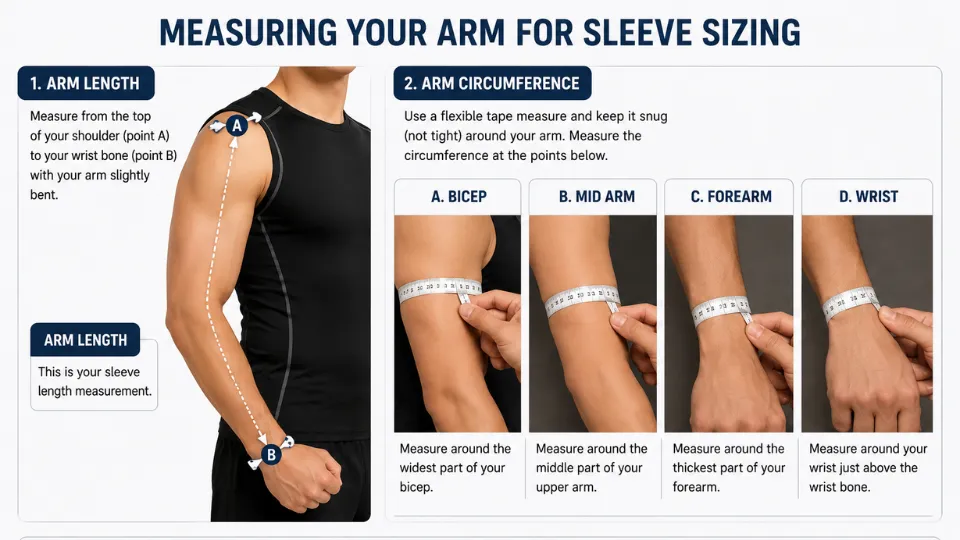
Getting the right measurements before making a sleeve saves you from one that bunches, slides, or cuts off circulation. Take these three before you cut:
- Arm length:measure from the top of your shoulder down the outside of your arm to your wrist with your elbow slightly bent. This is your sleeve length.
- Upper arm circumference:wrap the tape around the widest part of your upper arm while relaxed. Add one to two inches for ease and seam allowance if sewing your own.
- Wrist circumference:wrap around your wrist at the point where your hand begins.
How to Cut Your Fabric for a DIY Arm Sleeve
Most arm sleeves do not require a shaped pattern; a simple rectangle works for most uses. Here is how to cut:
Short sleeve (wrist to just below elbow): cut two rectangles of approximately 16 by 14 inches, adjusted to your wrist-to-elbow length and forearm circumference.
Full-length sleeve (wrist to upper arm): cut two rectangles of approximately 20 by 16 inches, adjusted to your arm length and bicep circumference plus seam allowance.
Grain direction: always cut with the stretch going around the arm, not along its length. The fabric should stretch width-wise so the sleeve flexes when you bend your arm.
How to Sew Your Sleeve
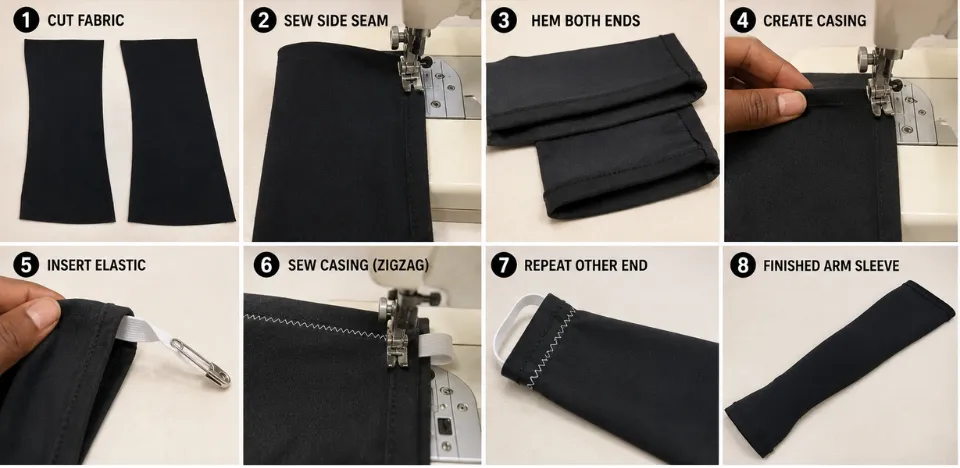
Follow these steps in order, as each one builds on the last. This method is based on the beginner-tested approach:
1. Finish the long edges. Run a zigzag or overlock stitch along both long edges of each rectangle.
2. Create the casing channels. On each short end, fold the raw edge over by three-eighths of an inch and press flat with your iron. Then fold again by three-quarters of an inch and press once more.
3. Stitch the casing. Sew close to the inner fold on each end, leaving a one-inch gap unsewn for inserting the elastic. Backstitch at the start and finish of each seam to secure it.
4. Fold and pin lengthwise. Fold each rectangle in half with right sides facing each other and long edges aligned, and pin along the length
5. Sew the side seam. Using a zigzag or stretch stitch, sew along the pinned long edge with a three-eighths-inch seam allowance. Backstitch both ends.
6. Press the seam. Open the side seam and press it flat with an iron to reduce bulk inside the finished sleeve.
7. Insert the elastic. Thread the longer elastic piece through the upper arm casing using a safety pin. Overlap the ends by three-eighths of an inch once fully through, and stitch back and forth across the overlap to secure. Repeat with the shorter elastic at the wrist.
8. Close the gaps. Stitch the small casing gaps closed by machine or by hand. Turn the sleeve right-side out and try it on.
What Does an Arm Sleeve Do?
Depending on the material and construction, it can do several different things at once. It supports blood flow, reduces muscle vibration during repetitive movements, and provides UV protection. It also regulates temperature by wicking sweat away from the skin and protects against abrasions.
In the case of gaming sleeves, they reduce friction between the forearm and desk surface for more consistent mouse control. For a deeper look at sport-specific uses, see our blog on what arm sleeves do.
Does an Arm Sleeve Prevent Tanning?
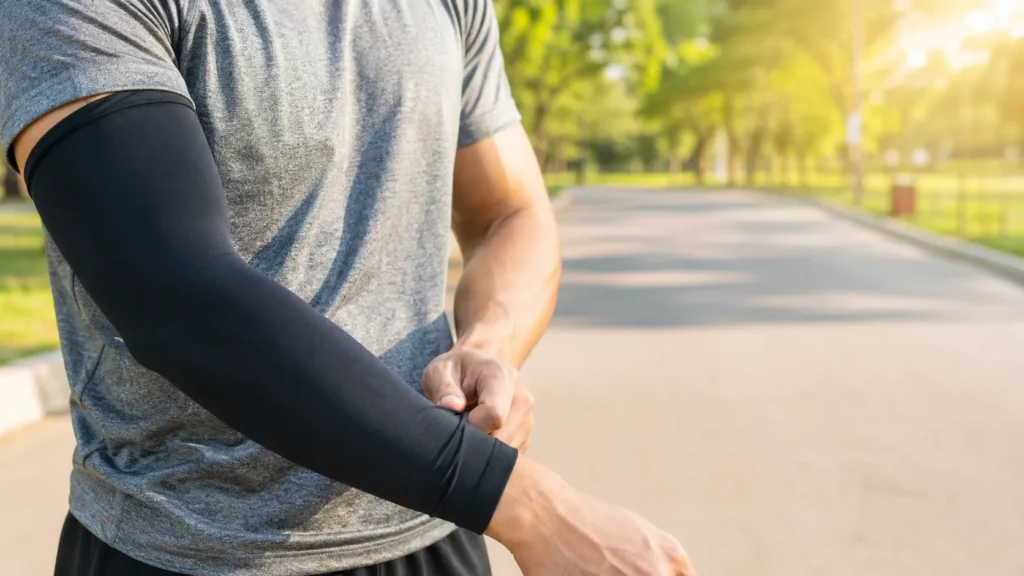
Yes, quality personalized arm sleeves can significantly reduce tanning on covered skin. UV rays are responsible for both sunburn and the melanin production that causes skin to darken. A sleeve with a UPF rating blocks a high percentage of both UVA and UVB rays before they reach the skin. UPF 50, for example, blocks over 98 percent of UV radiation, enough to prevent both burning and visible tanning during extended outdoor exposure.
Why Do Athletes Wear Sleeves on One Arm?
For basketball players and baseball pitchers, the sleeve keeps the throwing or shooting arm consistently warm and supported, which helps with muscle feel and consistency. For contact sport players, it also protects the dominant arm from scratches and floor abrasions. You can read the full history behind this in our blog on why basketball players wear arm sleeves.
How to Wash a Kinetic Arm Sleeve
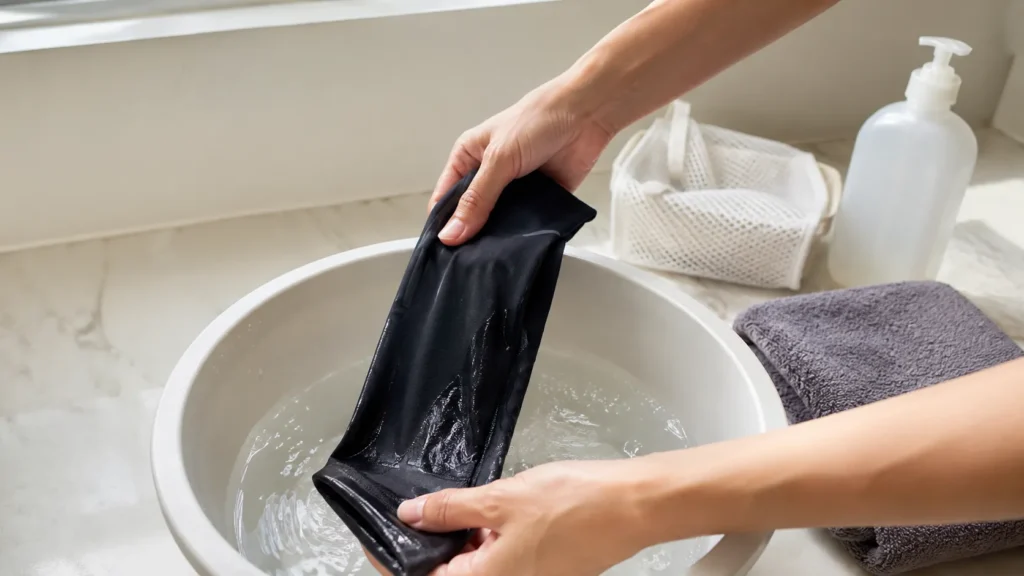
Kinetic arm sleeves need careful washing to preserve elasticity and print quality. Hand washing in cold water with a mild detergent is always the safest method. Gently squeeze the fabric rather than wringing it to avoid stretching the fibres. Here are the key rules:
- Machine washing:place the sleeve inside a mesh laundry bag, use a delicate or gentle cycle, and keep the water cold.
- Detergent:use a mild, non-bleach formula. Never use fabric softener; it coats the moisture-wicking surface and reduces its effectiveness over time.
- Drying:air dry flat or hang away from direct sunlight. Avoid tumble drying on high heat, as this can shrink the sleeve and break down the compression structure.
Where Can I Buy Arm Sleeves?
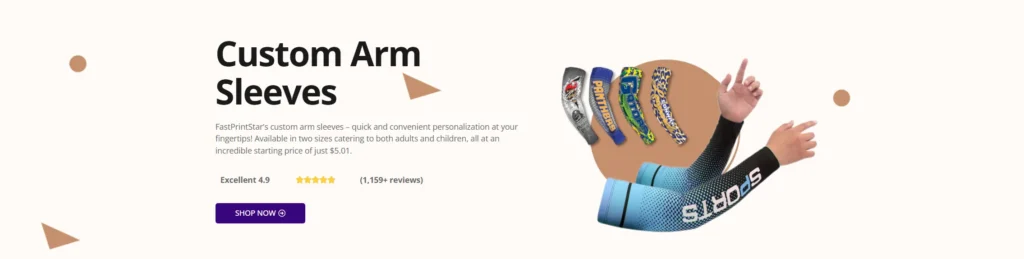
Home-sewn sleeves work well for basic protective or casual use. But for compression fit, vivid professional printing, or a custom design for a full team, FastPrintStar delivers what home sewing cannot match.
Their custom sublimated arm sleeves start from just one piece with no minimum order, are made from premium ice silk, and come in child and adult sizes. Your design is printed directly into the fabric for vivid colour that never cracks or fades — and with free design assistance and fast dispatch via DHL and FedEx, the whole process is as easy as uploading your artwork.
While you are there, browse their full custom arm sleeves collection, along with related products like custom neck gaiters, customized hoodies, and custom bucket hats.
Ready to create your own custom arm sleeves? Get a free quote today and bring your design to life with FastPrintStar.