
How to Use a Bottle Opener?
Table of Contents
ToggleHow to Use a Bottle Opener?
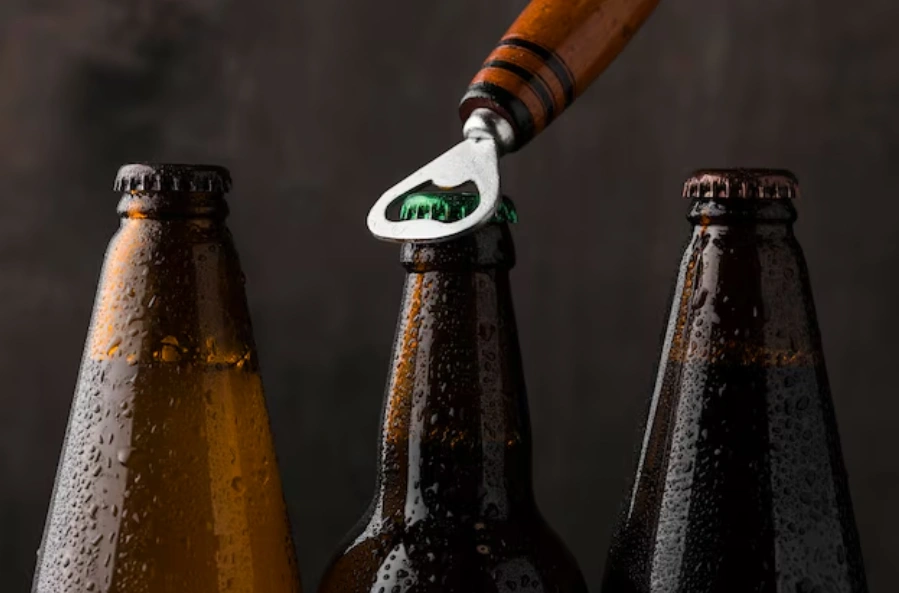
Whether you are opening a beer or a soft drink bottle at home or even working behind the bar, a bottle opener is a simple tool that makes your drinking experience seamless. While many people see this tool as an essential component for opening bottles, they fail to understand the principles behind its creation by the Bernadine Bottle Company, its operation, and its multiple functions. In the last few years, manufacturers have created a wide variety of different bottle openers; these variations have taken this simple tool from just bottle-opening uses to a multi-functional device that helpmour daily lives. In this article, we explain the working principle of the bottle opener, its class lever, the other usage of the bottle opener, and many other things.
How do bottle openers work?
I know it looks straightforward to most people when they hear about how bottle openers work. Well, it’s not really a whole lot of moving parts; it’s the work of what can be described as a lever. This leverage can be simplified as a way the bottle opener multiply and harness the force you apply on the metal cap of the bottle rather than brute force. A bottle opener consists of three moving parts, including
- The hook or lip that slides under the edge of the bottle
- The fulcrum or pivot point that rests on top of the bottle
- The handle that allowsyouh to apply thr much needed pressure.
There is a secret behind how all these three component works together. The little secret is more of the mechanical advantage that bottle openers often have over bottle caps. Most of the bottle openers have a longer handle. This long distance between the handle and the fulcrum and the cap means that a small amount of force from your hand produces a much larger lifting force. This design principle ensures you only need a little effort to open bottles.
What class lever is a bottle opener?
There are three basic classes of lever, namely, first, second, and third, based on the relative position of the fulcrum, load, and effort. In this instance, the bottle opener has the load in the middle and is flanked by either side of the fulcrum and effort, which implies that this tool falls in the second class of lever. The importance of this setup can not be overestimated in the sense that when you pull the handle upward, the opener pivots on the fulcrum and lift thr cap, which is the load. Hence, making it easier for you to remove the bottle cap than pulling it directly with your hand. These mechanisms reinforce the saying that a bottle opener is an ingenious piece of engineering that turns a difficult task of opening a bottle cap into a seamless and simple task without any effort.
What is the other side of a bottle opener for?
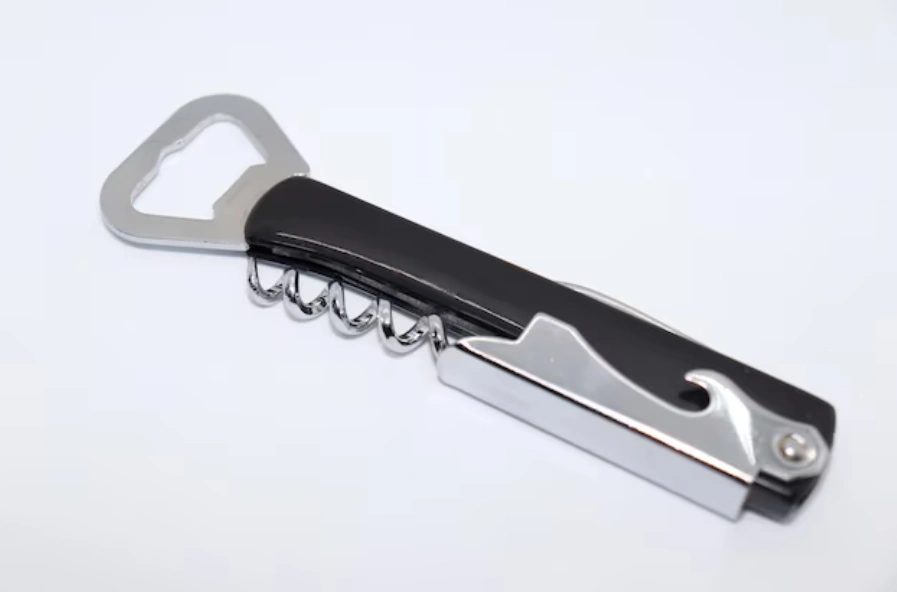
In this new age of multifunctionality and aesthetics, most bottle openers often have some extra features that most people don’t even know about. While one end of the bottle opener is designed for removing the bottle cap, there are some other sided thag add functionality and convenience in other aspects of life, most importantly in bars and kitchens.
1. Ring Pull Lifter or Can Tab
Some bottle openers have a flat or hooked edge that helps lift pull tabs on cans. This makes it easier to open drinks without breaking a fingernail or struggling with tight tabs.
2. Pry Tool
The opposite end can sometimes be used to gently pry open lids, loosen small metal seals, or lift stubborn edges on packaging.
3. Screwdriver Edge
Certain openers, especially multi-tools or bar “speed openers,” include a flat end that works like a simple screwdriver for quick adjustments or minor tasks.
4. Hanging or Keychain Attachment
Some designs include a hole or notch on the other side so the opener can be attached to a keychain, belt, or wall hook for easy access.
Can you open a can with a bottle opener?
This is such an interesting question that most people often find it a dilemma. Truly, you can open a can with a bottle opener. This possibility is not an everyday occurrence because not every bottle opener have thr flat or hooked edge that can be used to open a can. But in case you have a bottle opener thag fit the above specifications, you can lift the pull tab on cans easily or pry up loose metal lids on your can. As we said, opening a can with a bottle opener is not an everyday possibility; there are quite a few safety tips if you are trying to go this route, in case of energy.
- Ensure that you don’t puncture the can with force
- Use gentle pressure if you are lifting a pull tab
- Stop if the lid becomes too difficult to control.
Can opener vs bottle opener?
Although these two simple tools look very much alike when you look at them, their working mechanism. However, there are obvious differences between a can opener and a bottle opener, most importantly in how they are designed. A bottle opener is designed to remove the metal crown caps from a bottle by lifting and bending the cap until it pops up without cutting the Metal. While a can opener is designed to cut through the metal lid of a can with a sharp rotating wheel or blade that slices around the edge of the can. The following is the summary table that gives you an insight into the difference between a bottle opener and a can opener.
Feature | Bottle Opener | Can Opener |
Primary Use | Removes bottle caps | Cuts and removes can lids |
Mechanism | Leverage (lifting action) | Cutting wheel or blade |
Moving Parts | Usually none | Multiple moving components |
Size & Portability | Small and compact | Larger and heavier |
Safety Risk | Low | Moderate (sharp edges possible) |
Best For | Glass bottles with crown caps | Metal food or drink cans |
How are bottle openers made?
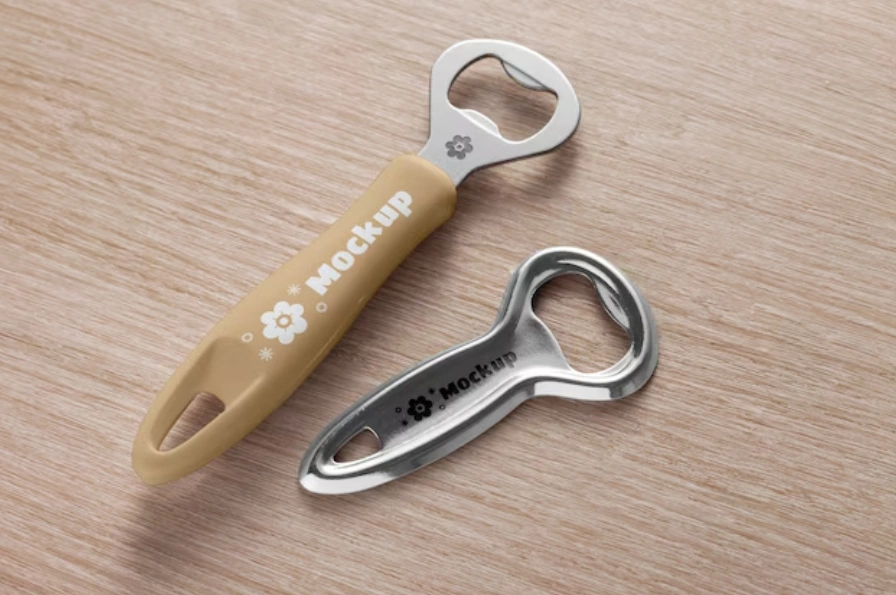
Several manufacturing steps went into the making of a bottle opener that is durable, strong, and easy to use. For instance, at Fastprintstar, we combine our expert-level metalworking techniques with intricate design precision to create a tool that makes life easier for you.
1. Material Selection
Custom bottle openers are made from durable materials such as stainless steel, which is resistant to rust and corrosion, aluminum that provides users with a lightweight and affordable option, zinc that features mostly on the cast designs, while plastic or wood are added for handles and customization style.
2. Cutting
Large metal sheets are cut or stamped into the basic shape of a bottle opener. This step creates the outlines for the opening slot that grips the bottle cap.
3. Shaping and Forming
This is one of the most important parts where your design preference comes into play. At Fastprintstar, we ensure your preference comes to fruition as we bend or mold the metal to create the angle and thickness needed for aesthetic and leverage.
4. Smoothing.
After shaping, there are obvious sharp edges across the sides. So we polish or grind down these edges to make sure the openers are safe to handle.
5. Branding and Design
Most customers have their decorative finishes in min, including the addition of logo and engravings. To achieve this, Fastprintstar ensures the fine detailing and branding of the bottle opener with custom design paintings and coating.
Final thought
A custom bottle opener may be a small and simple tool, but it relies on smart design and basic mechanical principles to make opening bottles quick and effortless. From understanding how leverage works to knowing why it functions as a second-class lever, it’s clear that this everyday item is more thoughtfully engineered than most people realize.
Whether you’re using a classic handheld opener, a bar tool, or a multi-function design, understanding its purpose and mechanics helps you get the best results. With the right bottle opener, opening your favorite drink becomes a simple, smooth, and hassle-free experience every time.