What Are Medals Used For? A Simple Guide for Events & Awards
Table of Contents
ToggleWhat Are Medals Used For? A Simple Guide for Events & Awards
Understanding medals helps event organizers, schools, companies, and organizations choose appropriate recognition methods for their specific needs.
This comprehensive guide explores medal types, materials, manufacturing processes, and modern applications across diverse settings.
What Is a Medal?
A medal is a small decorative disc, typically round but sometimes shaped differently. It is customized to recognize achievement or commemorate significant events. According to medal history, these portable artistic objects date back centuries, has evolved to today’s diverse recognition awards.
Unlike trophies, which stand on display surfaces, medals are designed to be worn around the neck on ribbons. They can also be stored as keepsakes commemorating specific accomplishments. Most medals attach to ribbons, allowing recipients to wear them during ceremonies or display them prominently afterward.
Many recipients treasure medal collections representing years of dedication and display them in shadow boxes showcasing their journey.
Why Medals Still Matter in Modern Events
In our digital age, where achievements often exist only as online badges, physical medals maintain profound significance. Tangible awards create emotional connections that virtual recognition cannot replicate. Holding a medal and displaying it physically reinforces the achievement’s reality and importance.
Medals provide universal recognition, instantly understood across cultures and languages. A gold medal signifies first place, whether awarded in Tokyo or Toronto. This visual language transcends barriers, making medals ideal for international events and multicultural organizations.
Modern event organizers recognize medals as powerful motivational tools. Race directors report that custom finisher medals significantly increase registration rates for running events. Schools implementing medal recognition programs observe improved student engagement and achievement.

Common Types of Medals for Different Occasions
Different situations call for specific medal styles matching the event’s nature and significance level.
Sports and Athletic Medals
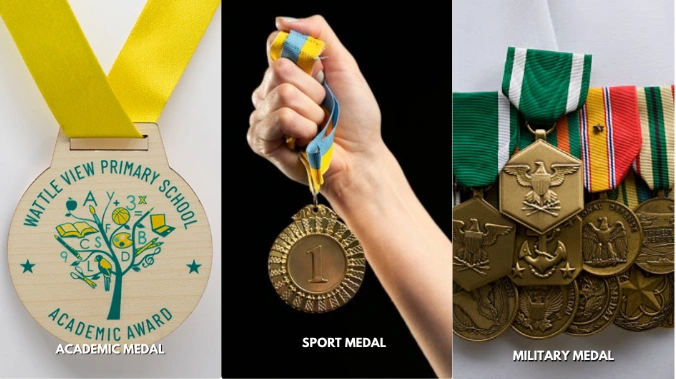
Sports medals recognize athletic achievement across competitive levels. Championship medals awarded to tournament winners typically feature larger sizes, premium materials, and elaborate designs. Participation medals given to all race finishers encourage continued involvement regardless of placement.
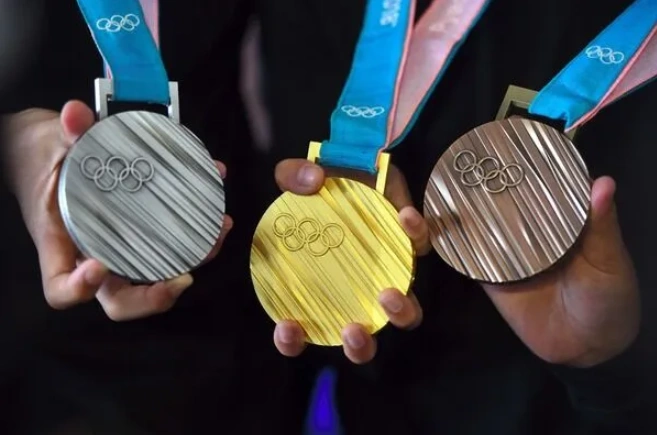
Place medals distinguish first, second, and third positions through gold, silver, and bronze finishes, respectively.
Academic Achievement Medals
Educational institutions award medals recognizing scholarly excellence, perfect attendance, subject mastery, or graduation milestones. School medals motivate students while building positive associations with learning and achievement.
Military and Service Medals
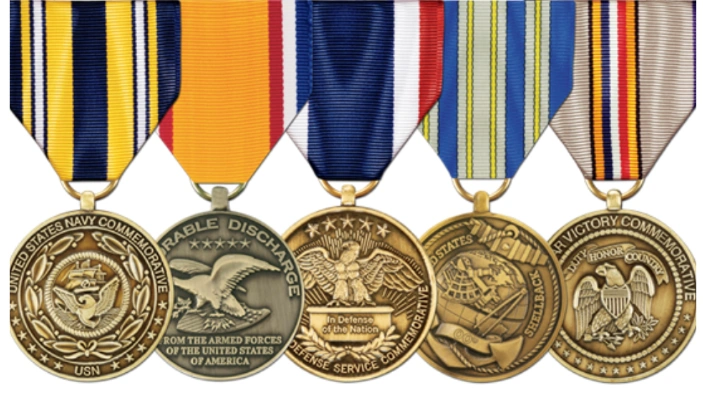
Military medals represent the highest honor, recognizing service, bravery, deployments, and sacrifices made by armed forces members. First responder medals similarly honor police officers, firefighters, paramedics, and other emergency personnel.
Corporate Recognition Medals
Businesses use medals recognizing employee milestones, including years of service, sales accomplishments, or innovation contributions. Corporate medals enhance company culture and create pride among team members.
Materials Commonly Used in Medals
Medal material selection impacts appearance, durability, and cost, with each option offering distinct advantages.
Zinc Alloy
Zinc alloy dominates modern medal manufacturing, comprising over 80% of custom medals produced today. This material offers exceptional detail reproduction, corrosion resistance, and affordability. It costs approximately 40% less than solid brass while maintaining comparable quality.
Brass and Bronze
Traditional brass and bronze medals provide a classic metallic appearance and substantial weight. These materials work excellently for prestigious awards, military medals, and high-end recognition programs.
Iron and Steel
Iron medals offer a unique rustic appearance while steel provides industrial strength. Some manufacturers incorporate historical elements like the 2024 Paris Olympic medals, which famously included hexagonal iron pieces from the Eiffel Tower. This connects modern achievement with cultural heritage.
Precious Metals
Gold, silver, and platinum medals represent the highest recognition level. While solid precious metal medals are prohibitively expensive for most applications, electroplating techniques apply thin layers of these metals over base materials, achieving a premium appearance at manageable costs.
How Event Medals Are Made?
Understanding medal manufacturing helps organizers make informed decisions about timelines, costs, and design possibilities.
Design and Prototyping
The manufacturing process begins with design creation. Clients provide concepts, sketches, or specific requirements, which professional designers convert into detailed digital artwork using CAD software. Designers create 3D renderings showing exactly how finished medals will appear for approval.
Mold Creation
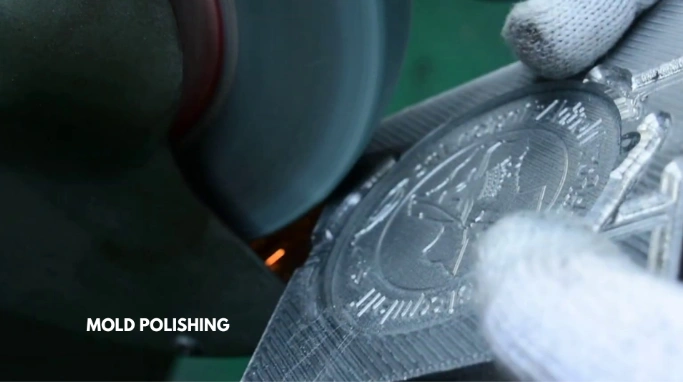
High-precision CNC engraving machines carve medal designs into steel molds. After initial engraving, molds undergo heat treatment, hardening them for durability. Finally, molds are carefully polished, removing imperfections.
Die-Casting Process
Medal blanks are created by melting zinc alloy or chosen metal and pouring molten material into prepared molds. For high-volume production, centrifuge machines spin molds while metal fills cavities, ensuring complete coverage and consistent results.
Trimming and Polishing
Excess metal, called “flash,” is trimmed from medal edges. Then, machines polish surfaces creating smooth, uniform finishes ready for subsequent treatments. Quality inspectors examine each medal for cracks, uneven edges, or casting flaws at this stage.
Plating and Finishing
Electroplating deposits thin layers of gold, silver, bronze, copper, or other metallic finishes onto medal surfaces through electrolysis. This process creates desired colors while protecting base metal from oxidation.
Coloring and Details
Colored enamel fills designated areas according to design specifications. Soft enamel technique leaves paint slightly recessed below metal borders, creating a textured appearance. Hard enamel involves filling, baking, and polishing until perfectly smooth.
Ribbon Attachment
Custom ribbons matching event colors or branding are attached through medal rings.
Get Your Custom Event Medals from FastPrintStar
When planning events requiring high-quality medals that create lasting memories, FastPrintStar delivers exceptional custom medals for every occasion. They specialize in creating beautiful medals combining premium materials with competitive pricing. Their custom medals are perfect for sports tournaments, academic competitions, and corporate recognition programs.
Their experienced team provides expert design assistance with creating medals that participants will treasure for years. Whether you need small quantities for special awards or large volumes for major events, FastPrintStar delivers. They offer fast production and reliable delivery, ensuring your medals arrive on schedule.
With simple and short ordering processes, your medal will be just a call away. Visit FastPrintStar today to start designing custom event medals that participants will display with pride.